live_tv
Livestream Starting Soon
00
Hours
:
00
Minutes
:
00
Seconds
Up next in 10


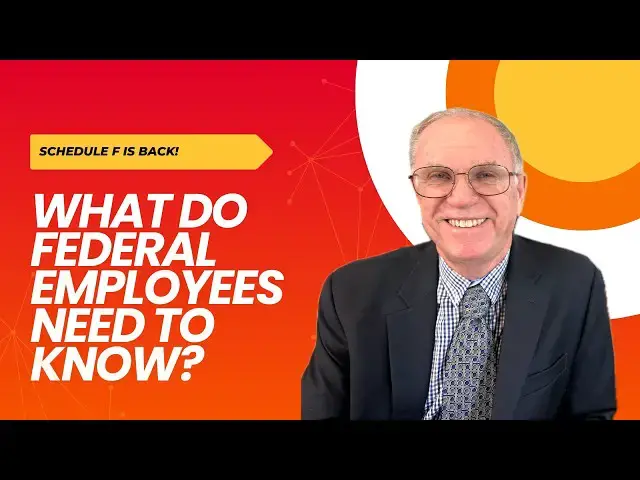
President Trump is reviving a push to reshape the federal workforce by creating a new category: “Schedule Policy/Career Positions,” formerly known as Schedule F. These positions are designed for employees in policy-making or policy-influencing roles, and the change could significantly alter federal job protections. OPM is set to issue a proposed rule allowing agencies to move employees into this category—removing their right to appeal to the MSPB in the process.
We explain the key points of the White House fact sheet, what agencies can expect, and how this could reshape the federal civil service.
Related Articles
“Draining the Swamp”: Schedule F is Back and Moving Forward
https://www.fedsmith.com/2025/04/19/draining-the-swamp-schedule-f-is-back-and-moving-forward/
Schedule F Quickly Moving Forward
https://www.fedsmith.com/2025/01/28/schedule-f-quickly-moving-forward/
AFGE Sues Trump Over Schedule F
https://www.fedsmith.com/2025/01/30/afge-sues-trump-over-schedule-f/
Chapters
0:00 Introduction
1:45 Draining the Swamp and Schedule F
2:39 Schedule F in Second Trump Administration
4:00 Schedule/Policy Career Classification Moving Forward
5:16 Reasons for OPM's Proposed Rule
Show More Show Less View Video Transcript
0:00
my name is Ralph Smith i've been working
0:02
uh writing a number of articles for
0:04
FitSmith over the last number of years
0:07
and I've had several decades of working
0:09
in and around the federal government as
0:12
an employee and as a government
0:13
contractor for several
0:15
decades so one of the first things I
0:18
learned when I started working for the
0:19
government which was part of the
0:21
Treasury Department at the time I'd
0:23
passed the entrance exam i'd gone
0:25
through all the steps necessary to get a
0:27
job and I wanted to do a good job so
0:30
when I started there I quickly decided I
0:33
need to find out what's going on in this
0:35
vast bureaucracy that frankly was kind
0:38
of overwhelming all the rules and
0:40
regulations and trying to decide how to
0:42
do a good job so I found a couple of
0:45
people around who had 20 30 35 years of
0:48
experience and I asked them "What do I
0:51
do we've got a new president now and
0:54
he's making changes and that's fine i
0:57
didn't even know the existing system but
0:59
what do we do how do we implement these
1:01
changes and basically I was told by one
1:03
of them look I've been around this
1:05
agency for 30ome years and presidents
1:08
come and presidents go we're responsible
1:11
for making sure our programs for which
1:13
we have responsibility are implemented
1:16
successfully so I was writing it before
1:18
this president came in he'll be gone and
1:21
I'll be running this same program after
1:24
he leaves
1:26
and if we run it and we do a good job it
1:30
runs well the politicians take the
1:32
credit for it if it doesn't run well
1:34
they'll assign the blame to us that's
1:36
how it works so don't worry about it
1:39
don't make the changes that they're
1:40
talking about they're not that relevant
1:42
anyway and we'll go from there now why
1:45
is that important well that was a long
1:47
time ago but apparently according to
1:51
several people within the first Trump
1:53
administration the same type of attitude
1:55
exists president Trump refers it to
1:58
draining the swamp he wants to change
2:00
that system and the way he tried to do
2:03
it in his first term was what he calls
2:05
schedule F and essentially what schedule
2:08
F would have done had it gone into
2:10
effect which it never did before he left
2:14
office it would have changed career
2:17
employees in some positions into at
2:19
willill employees meaning they'd be
2:21
moved into a different career category
2:24
schedule F and that if they weren't
2:26
working to help the administration
2:28
accomplish its goals they could be fired
2:31
and in order to make this happen quickly
2:34
they would be taken away from the
2:36
protections that civil service employees
2:39
have well President Trump is now in his
2:41
second term and in the first day in
2:44
office he issued an executive
2:46
order addressing the same topic and he
2:50
called it ensuring
2:51
accountability so he issued the
2:54
executive order opm issued guidance to
2:56
agencies and agencies were given 90 days
3:00
to come up with a list of employees that
3:02
fell into this new category of employees
3:06
they would still be career employees but
3:08
they would be considered policy career
3:11
classification employees meaning they'd
3:14
be put into a different
3:15
classification and if they weren't doing
3:18
the job that the supervisor anybody in
3:20
the agency in a powerful position
3:23
thought wasn't that person wasn't
3:25
helping them implement the
3:27
administration's objectives they could
3:29
be removed easily quickly it's hard to
3:33
fire a federal employee in the sense
3:35
that they have a lot of appeal rights by
3:38
the time the appeals are exhausted
3:41
sometimes it usually takes several years
3:43
for an employee to be fired the
3:45
administration under Trump doesn't want
3:47
to do that they want to make it quicker
3:50
easier faster so that's what the purpose
3:54
is of what used to be called schedule F
3:57
now it's simply called policy and career
3:59
classification it's moving on this last
4:03
week on Friday evening actually uh
4:06
President Trump issued a fact sheet and
4:08
in his fact sheet he referenced that OPM
4:11
would be issuing a proposed rule and the
4:14
purpose of the proposed rule is moving
4:16
ahead to create this new category of
4:20
federal employees the 90 days federal
4:23
agencies were given to identify which
4:25
employees would be put into this new
4:27
category is just about up so presumably
4:30
OPM has an idea about how many employees
4:34
would be affected and moved into this
4:36
new category opm estimates around 50,000
4:40
people now when this was done back in
4:42
2020 some people estimated as many as
4:45
200,000 people would eventually be
4:48
impacted and put into an at will type of
4:51
job we don't really know how many people
4:53
will be impacted but it is moving
4:55
forward so we'll find out opm has issued
4:59
a proposed rule or is about to issue a
5:01
proposed rule that would actually go
5:04
ahead and move forward on creating this
5:07
category of employees and agencies would
5:10
after it becomes effective start moving
5:12
employees into this new category so
5:14
here's what's going on president Trump
5:18
calls it draining the swamp and the the
5:21
reasons he gives for creating this new
5:23
category are some of the following he
5:26
said that the OPM rule when it's issued
5:28
would empower federal agencies to
5:30
swiftly swiftly remove employees in
5:33
policy
5:34
influencing roles and the kinds of
5:37
reasons that they would be removed would
5:39
include poor performance misconduct
5:42
corruption or sub subversion of
5:45
presidential directives without having
5:47
to go through the lengthy procedural
5:49
hurdles that they would now have to go
5:51
through assuming they maintain the same
5:53
appeal rights that they continued to
5:55
have and he cited several reasons for
5:57
this and it relates back to what I
5:59
mentioned at first uh James Shurik who's
6:02
a person who was helping the
6:04
administration in the first term and
6:06
apparently has some similar type of
6:09
power in the second term wrote an
6:11
article that outlined what kinds of
6:13
problems he ran into in trying to
6:16
implement objectives of the
6:19
administration and most of it was not
6:21
any direct refusal it was simply people
6:24
saying "Well yeah we will do that we're
6:27
glad you told us that's what we're
6:29
supposed to do and we'll get right on it
6:31
he'd call back a week two weeks a month
6:33
later and they'd say "Yeah a lot of
6:35
stuff's come up we've been swamped we
6:37
haven't gotten to it but we'll get right
6:38
on it." In other words they wouldn't
6:41
implement the objectives that the
6:43
administration was seeking they didn't
6:45
really refuse they just never got it
6:47
done and I to be fair he also said that
6:50
most people he dealt with were easy to
6:52
work with they did what he asked them to
6:55
do they'd discuss it they'd go ahead and
6:57
implement it but not everybody and it's
6:59
the not everybody that they were trying
7:01
to get rid of and put somebody else in
7:03
their position that would help the
7:05
administration implement their
7:06
objectives in effect President Trump in
7:09
his fact sheet said agencies don't hold
7:12
employees accountable they want to
7:14
change that removing federal employees
7:16
is lengthy and difficult they want to
7:18
get rid of that lengthy process make it
7:21
quick and easy bureaucrats use
7:23
protections a system gives them to
7:26
oppose presidential policies and oppose
7:28
their own preferences in effect this is
7:31
what he's calling the deep state federal
7:33
employees with a lot of protection a lot
7:36
of appeal rights can't be fired at least
7:39
not quickly and easily so they remain on
7:41
the job for decades imposing their own
7:45
preferences establishing policies they
7:47
prefer and ignoring what the
7:50
administration wants them to do he says
7:52
in effect in his fact sheet
7:53
unaccountable bureaucracy undermines
7:56
bure democracy and he wants to create a
7:58
more democratic government by opposing
8:01
or getting rid of people who are
8:04
opposing the administration putting into
8:06
place its objectives now what would the
8:08
impact be on federal employees if this
8:10
goes through first out at willill
8:12
employment meaning you can be fired
8:14
quickly and easily secondly the scope of
8:17
positions it targets career employees in
8:20
policy influencing roles not political
8:22
employees career employees there's a
8:25
distinction and by saying it's people
8:28
who make policy it's not just those who
8:30
sign the piece of paper that may be a
8:32
political appointee they refer to it as
8:35
a person who influences policy
8:37
recommends policy publicizes policy
8:41
anybody in a role that determines what
8:44
that policy may ultimately be would be
8:47
subject to be put into this new category
8:50
of federal employees nonpartisan hiring
8:53
appointments to these positions should
8:55
remain nonpartisan and based on merit
8:58
not political affiliation he's saying in
9:00
effect we're not hiring just Republicans
9:03
we're not hiring just Democrats we want
9:05
people who will work with the
9:07
administration whoever is in power to
9:09
put it these goals into place and
9:12
finally no chapter 43 or 75 protections
9:16
employees who are put into schedule
9:18
policy career lose their coverage under
9:21
chapter 43 that is for performance or
9:24
chapter 75 adverse actions for
9:27
misconduct or other types of violations
9:30
the impact is they will not be able to
9:32
appeal a removal to the merit assistance
9:34
protection board now several things go
9:37
into the determination as to what's in
9:40
this final rule that OPM is going to be
9:42
proposing probably in the next week
9:43
there's a 30-day at least a 30-day
9:46
period for people to comment public can
9:49
comment unions will certainly comment
9:51
some federal employees may comment uh
9:54
members of the press may comment etc we
9:57
don't know what these comments will be
9:59
we don't know if it'll have any impact
10:01
on the final rule but we do know based
10:04
on past experience there are probably
10:05
going to be quite a few comments now OPM
10:08
may ignore them they may implement some
10:09
of them they may change the proposed
10:11
rules we'll have to see secondly uh
10:15
several lawsuits have been filed
10:17
involving this particular topic in
10:20
effect the unions are arguing it
10:22
violates due process it's
10:24
unconstitutional etc we don't know what
10:27
the courts will do chances are this is
10:29
going to end up going to the Supreme
10:31
Court as a number of other cases are
10:33
going to be going also one other thing
10:36
that's going on right now there's a
10:38
strong feeling that the Supreme Court is
10:41
about to issue a decision that would
10:43
hamper the ability of district court
10:45
judges to issue decisions that have a
10:48
nationwide impact the administration is
10:50
arguing you have district court judges
10:52
and there's about 690 of them issuing
10:55
decisions that determine or they would
10:58
like to determine the foreign policy of
11:00
the United States they would like to
11:02
determine how the executive branch is
11:04
run etc and the administration is
11:07
arguing to the Supreme Court in several
11:09
different cases that that's not how the
11:11
constitution intends the system to work
11:14
the president as the chief executive
11:17
should have the power to run the
11:18
executive branch so various cases
11:21
including removal of the chairman of
11:23
MSPV uh the special counsel for the
11:26
office of special counsel those kind the
11:28
national labor relations board uh has
11:31
been involved in some of these cases
11:33
these cases are all percolating they're
11:36
all going to the Supreme Court and we
11:38
don't know what'll happen what decision
11:40
the Supreme Court will issue we'll see
11:42
as this progresses we'll certainly do
11:45
other videos uh we wrote an article and
11:47
published yesterday on this latest fact
11:49
sheet and the new OPM proposed
11:52
regulation take a look at the article uh
11:55
please pay attention to what's going on
11:57
some of you perhaps 50,000 maybe 200,000
12:00
of you will be affected by this new
12:02
policy at as it goes into effect thanks
12:05
for watching if you enjoy it if you find
12:08
it useful consider subscribing to the
12:11
newsletter that we have at
12:13
fedsmith.com or the YouTube channel
12:15
where we provide these videos for our
12:17
readers and and viewers thank you very
12:20
much
#Law & Government
#Government
#Government