
More than 20 years ago, I wrote an article for Memorial Day honoring Willard C. (Bill) Smith, a World War II (WWII) veteran. At the time, there were hundreds of thousands of WWII veterans alive in America. Today, only a small fraction remain.
As of 2025, approximately 45,418 American WWII veterans are still alive. This represents less than 0.5% of the roughly 16.4 million Americans who served in World War II. The number continues to decline rapidly—most survivors are now 100+ years old, with roughly 100–130 passing away per day in recent years (though the daily rate has slowed as the total shrinks).
The generation that helped save the world from the threat emanating from Japan and Germany in the 1940s is disappearing before our eyes.
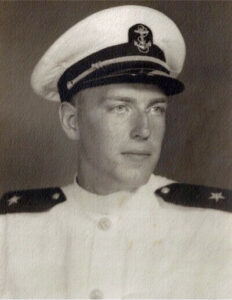
My father was one of them.
The original article appeared on FedSmith.com in November 2004. Eleven years later—on November 10, 2015, the day before Veterans Day—Bill Smith passed away at the age of 92.
He had spent eight years in the Navy serving during both World War II and the Korean War. He was drafted twice by his country. Like many from what Tom Brokaw called “The Greatest Generation,” he never considered himself extraordinary. He simply did what was asked of him.
But looking back now, it is obvious that men like him were extraordinary.
Leyte Gulf, Phillippine Islands in WWII
Photos he saved from his service at that time show one of the ships in the Philippines in March 1945 during operations in Leyte Gulf, one of the most important naval theaters of the Pacific War. One photograph is labeled:
“San Pedro Bay – Leyte Gulf – Philippine Islands
27 March 1945 – 5th & 7th Fleet”
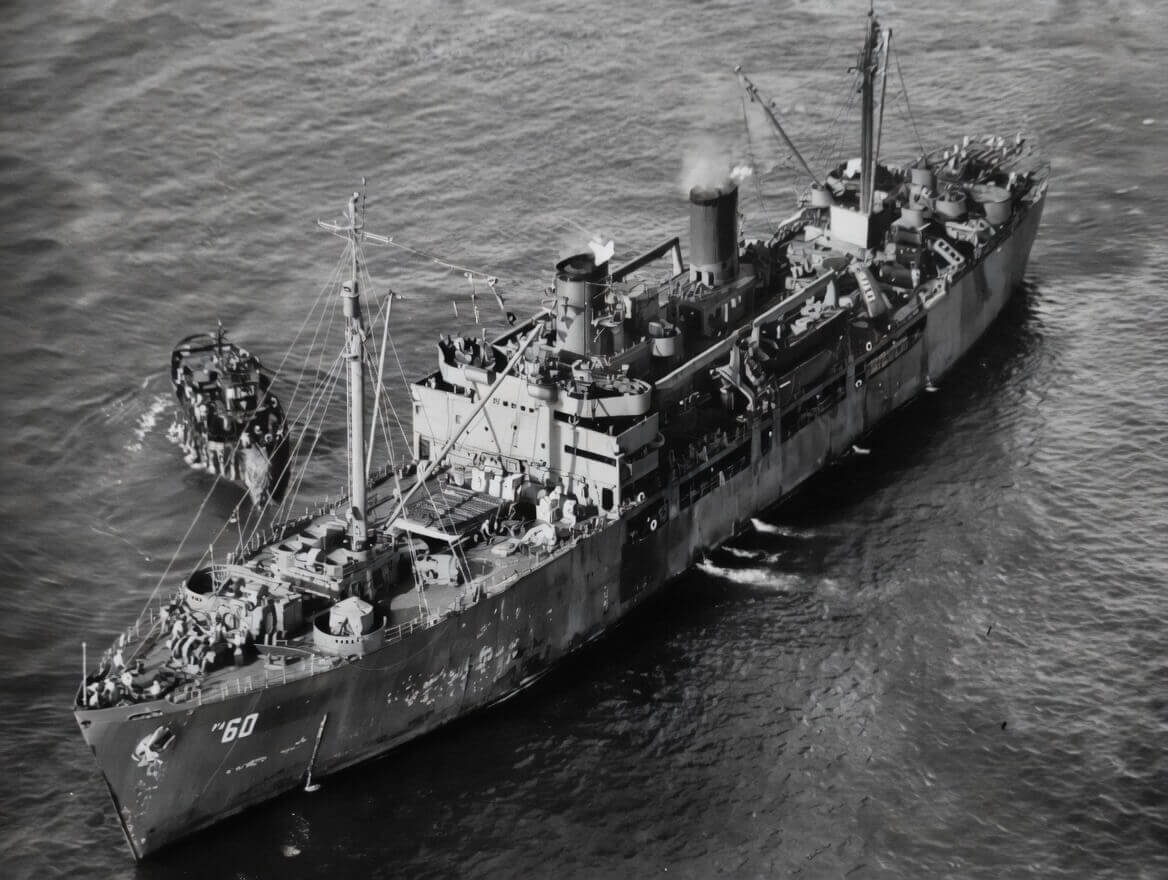
This image of a ship (enhanced with AI) Smith saved from his service there in the Philippines in 1945, is a Navy landing craft or gunboat used in amphibious operations during this military campaign. It is one of the landing craft or support ships used in the Philippines campaign as U.S. forces pushed toward the shores of Japan.
This photo was taken above the USS Banner in September 1945 and saved in Smith’s personal possessions. He distributed copies of this photo in reunions of Banner crew members in later years.
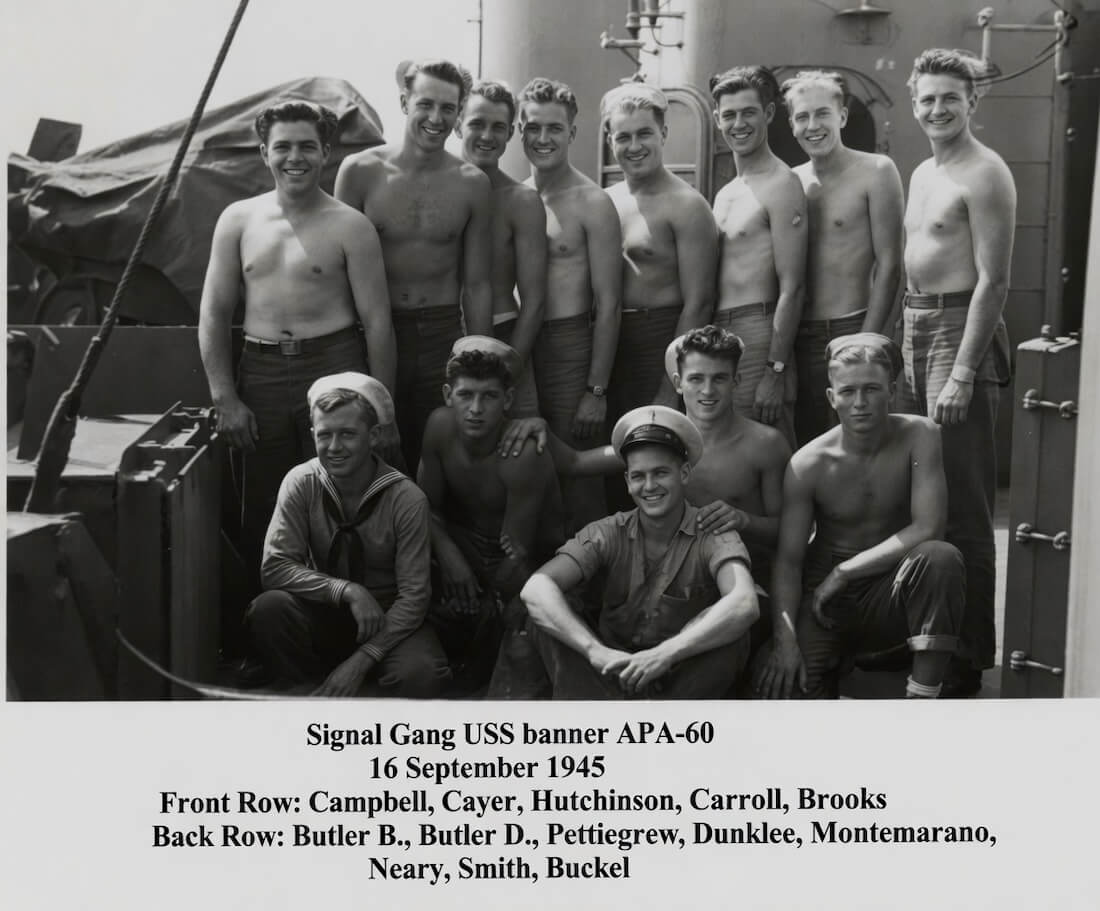
Those operations were part of the final brutal months of the Pacific war. By the spring of 1945, American forces were fighting island by island while preparing for the invasion of Okinawa and, potentially, the Japanese mainland itself.
He graduated from high school in 1942 with a state basketball championship and a college scholarship waiting. Instead of heading to campus, he donned a Navy uniform. America was at war, and healthy young men understood their lives had suddenly changed.
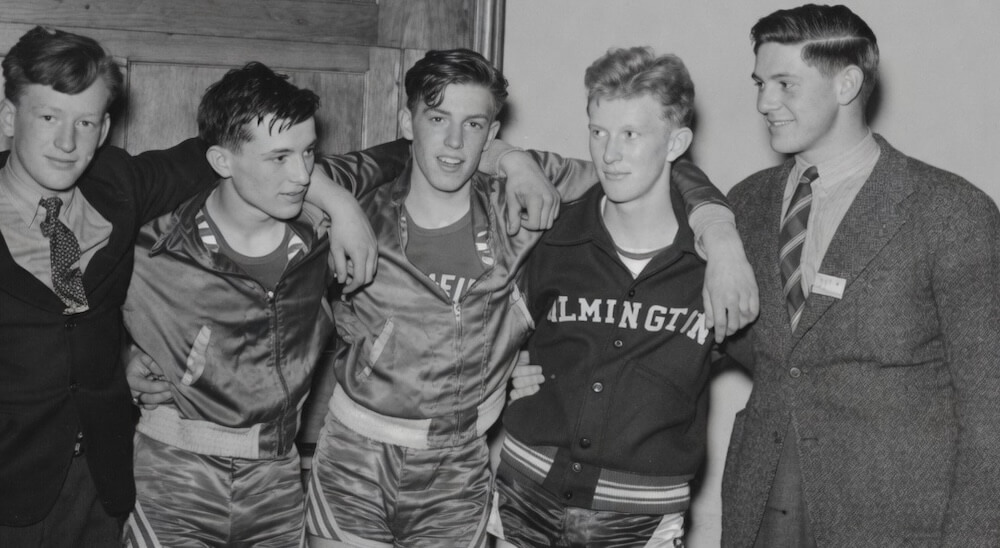
The basketball courts and small-town routines of Vermont were replaced by aircraft carriers, warships, and the vast uncertainty of the Pacific theater. He served aboard the USS Banner in the South Pacific as the United States fought Japan during the deadliest conflict in human history.
When the war ended, he returned home, married, started a family, and tried to build a normal life. Like millions of veterans, he rarely talked about what he had seen. He moved forward, found work, raised children, and focused on the future.
Then came Korea.
Once again, Uncle Sam came calling. Once again, he left his family behind and returned to military service—this time to a different ship, a different ocean, and another dangerous conflict.
America’s wars consumed eight years of his life. That sacrifice was common for his generation. Service was not viewed as optional. It was a duty.
Today, the men and women who fought World War II are almost gone. Most are now in their late 90s or older. Every day, America loses more of the people who endured Pearl Harbor, Normandy, Iwo Jima, Okinawa, the Battle of the Bulge, and countless other defining moments in history.
As their numbers decline, the country risks losing something more important than statistics. We are losing living witnesses to a time when sacrifice, national unity, and service to country were accepted without hesitation.
My father never complained about the hardships he endured or those endured by those with whom he served. He clearly took pride in serving his country and in the freedoms his generation preserved for those who followed.
Even decades after the war ended, the bonds formed during military service remained strong. Long after retirement and old age arrived, reunions with fellow sailors from the USS Banner still mattered deeply. The stories became fewer over time as more shipmates passed away, but the pride and friendships never disappeared.
Veterans Day should be more than a long weekend, a sale at the mall, or another date on the calendar. It should be a reminder that the freedoms Americans often take for granted were defended by ordinary people asked to do extraordinary things.
If you know a veteran, thank them.
If you knew a World War II veteran, remember them.
And if you still have one in your life, spend some time listening while you still can.
Comments