
FedSmith recently conducted a brief survey of recent federal retirees to gauge their experiences using the Office of Personnel Management’s new Online Retirement Application (ORA), which was launched last summer.
We received 160 responses that offer some intriguing insights into the experiences of these recently retired federal employees regarding the new digital retirement process.
The responses generally indicated that the individuals who used ORA found the software itself to be user-friendly, however, the process ultimately left an administrative “black hole” following submission that remains a source of significant anxiety and dissatisfaction.
The Digital Front Door: Easy to Enter, Hard to Navigate
The survey results indicate that OPM has succeeded in making the initial application process relatively painless.
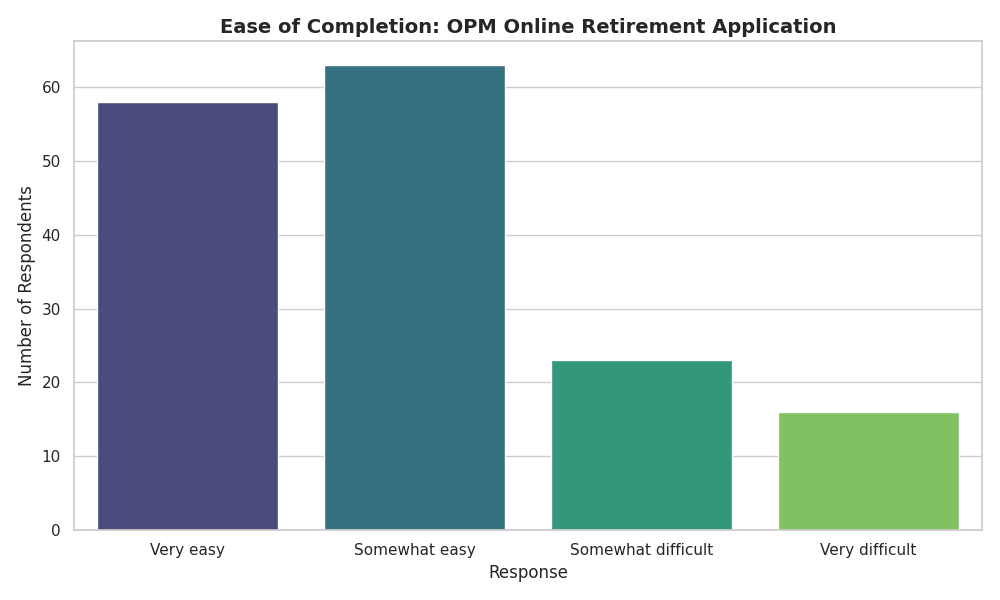
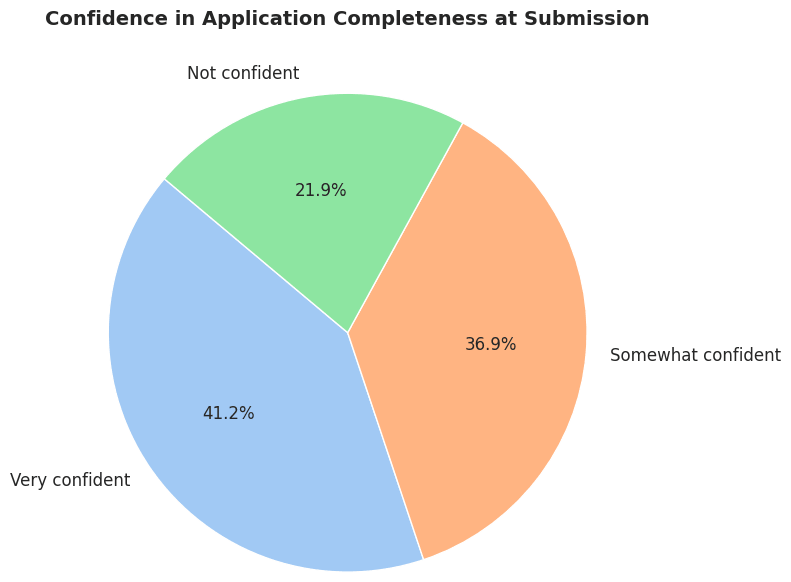
An impressive 75.6% of respondents described the ORA process as either “Very easy” or “Somewhat easy” to complete. This ease of use translated into high initial confidence, with 78.1% of retirees feeling confident that their applications were complete at the time of submission.
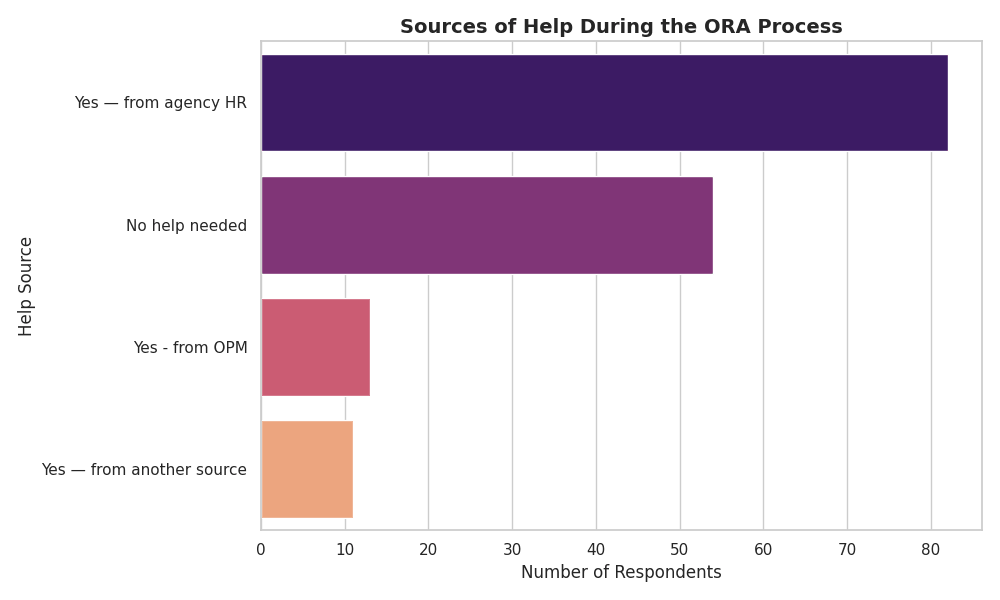
However, the “online” nature of the application did not eliminate the need for human intervention. Over 66% of applicants still required assistance during the process, with the vast majority (51.3%) turning to their agency’s HR department rather than OPM itself.
The Post-Submission “Black Hole”
The most glaring trend in the data is the sharp drop in satisfaction once the retirement application was submitted. Nearly half of all respondents (48.8%) expressed dissatisfaction with the communication and status updates provided after submission.
When asked if the online system represents a major improvement over the prior paper-based system, the consensus was underwhelming:
- 36.9% said “Yes”
- 23.1% said “No”
- 40% were “Not sure”
This uncertainty stems from a persistent lack of transparency. As one respondent noted, “ORA does nothing but transmit attachments to OPM from Agency HR Staff & Payroll with no ability for the applicant to confirm accuracy along the way!”
Others pointed to a lack of native communication throughout the process. For instance, one respondent stated, “[There needs to be] a way to contact someone during the process rather than calling a number that no one answers in OPM. A few status reports would be nice. Out of the blue a check gets electronically depositted [sic] and there is no way to find out what it represents until eventually a letter is received that may or may not address the issues.”
Another respondent added, “It was virtually impossible to talk to anyone at OPM. I could log in to ORA, but it didn’t seem to update in all steps.”
The Retirement Backlog Shadow
These findings come at a precarious time for OPM. The federal retirement backlog has surged in recent months, growing by 21% in February alone. The ORA was intended to be a primary tool in curbing this “exodus” of claims, yet the survey suggests that digitizing the intake of applications has not yet fixed the backend processing delays.
Monthly retirement processing data from OPM indicate, however, that the number of incoming digital retirement applications has picked up significantly along with the processing times; digital retirement claims are processed in about half the time as the paper applications.
The sentiment among retirees who responded to the survey is that while the “form” is digital, the “work” remains understaffed. One respondent bluntly suggested that OPM needs “more staffing to answer questions and do the processing work,” rather than just a better interface.
Another expressed concerns about launching ORA amidst last year’s federal workforce downsizing efforts, writing, “…implementing it in the middle of massive federal staffing cuts/DRP offers was insane.”
What Retirees Are Saying
The free-form responses on the survey provided a window into the frustration of those caught between a modern website and a legacy processing system. These are a sampling of some of the other responses shared by respondents:
- On Transparency:
- “Application queue number listing [is needed]. [We] also should be updated as the application proceeds between HR, Payroll and OPM.”
- “I have not had a response to email inquiries, phone calls, or voice messages since October 2025, and have no idea where in the process my application is.”
- On Accuracy:
- “The ORA annuity estimates were SUPER low and not accurate. It’s a disservice to feds!”
- “For my application, there were still bugs in the system. Most notably, my High 3 was consistently showing $0.00, which could never give me a good faith estimate of my pension annuity.”
- “I am/was a reemployed annuitant and my health insurance bounced from my agency, to OPM when I first retired, then back to my agency when I was rehired. The ORA system cannot recognize that I had my health insurance for more than 5 years and am therefore entitled to keep it.”
- On Human Interaction:
- “Need the ability to speak to people and not an AI generated system… More human interaction during the interim payment.”
- “Being able to speak with someone to answer questions [is needed]. Now staff is too busy and my retirement was processed with an error in my health insurance I can’t get anyone to correct.”
- On Technical Coordination: “I got 2 notices that documents were put in my EOPF after I retired. I tried to get them, but my account was non-existent. I can’t get the documents.”
There were positive experiences with the process. One respondent said, “It seemd [sic] like a pretty smooth process and definitely quicker than expected.”
Another person wrote in the comments on the original article with the survey, “I retired at the end of December, applied through ORA with a very simple case, one agency and no breaks in service. My payroll agency had my case for 2.5 months. OPM received my case on 3/2, I received my interim pay for January and February on 3/5. I was notified on 3/13 that my case has been finalized and e booklet is available in the portal today 3/16. Amazing!”
The Path Forward
For OPM, the survey results offer a clear roadmap. The ORA has successfully modernized the intake of retirement applications, but these responses suggest it has yet to modernize the experience of being a retiree in waiting.
Based on the clear trend indicated by these recent federal retirees, OPM must move beyond the “online form” and focus on end-to-end transparency. Until retirees can see where their application sits in the queue—and talk to a human when they have questions—the ORA risks being seen as a digital facade on a struggling system.
OPM’s data show that the ORA is clearly a step in the right direction given how it has improved retirement application processing times, but hopefully as it evolves in the future, the system can address the gaps in the communication process with retirees after they hit “submit.”