Search:

Custom Search
Photo of Ralph Smith

TSP Stock Funds Drop Again: Get a Grip and Put the Current Market in Perspective

By Ralph Smith

Thursday, October 2, 2008

You can have daily headlines from FedSmith.com delivered right to your desktop each business morning. The service is free and you don't get junk e-mail as the price of your subscription. Just visit our newsletter page to sign up!

The value of almost all of the funds in the Thrift Savings Plan have dropped substantially in recent days. There are two charts below that display the extent of the drop.

Whenever the stock market falls dramatically, as happens every few years, we start getting emails from readers that read along these lines: "Doesn't the government insure our TSP investments just as it does bank deposits?" Or, another question that occasionally pops up goes something like this: "The recent fall in the value of my TSP doesn't seem fair. Doesn't the government have an obligation to pay back the losses in our investments?"

The quick answer is "no" to both questions. The government does not have to pay back the loss in your TSP investments and there is no government insurance that covers the drop in value of your TSP investments.

Another refrain that is sometimes expressed by readers is along these lines: "Investing for retirement should not create this much stress. It doesn't seem fair that my future retirement hinges on the future of the stock market."

The reality is that investing in stocks always involves uncertainty. If the future was known with certainty, there would not be a stock market. People invest with the hope of making money and accumulating assets. Uncertainty creates a market for stocks or anything else and there are no guarantees when a person invests money in a company or a product. And, for retirees who may be depending on the money in stock funds to fund their retirement, the consternation is understandable. The only advice likely to be helpful in the short term is to cut back spending, leave as much as possible in the stock funds to avoid locking in losses, and wait for the market to turn back up.


TSP Fund Results: September 2008
Fund G F C S I
Sept. 08 0.31% -1.31% -8.94% -10.32% -12.31%
YTD 2.86% 0.84% -19.25% -16.08% -27.81%
12-Month 4.05% 3.89% -21.94% -18.90% -29.01%


L Fund Results: Sept. 2008
Fund Income L2010 L2020 L2030 L2040
Sept. 08 -1.75% -3.00% -6.01% -7.24% -8.35%
YTD -2.06% -5.45% -12.07% -14.67% -17.04%
12-Month -1.62% -5.51% -13.01% -15.97% -18.61%


Some readers appear to be drowning in their own hyperbole in a belief that our current situation is already comparable to 1929-1930.  But, for all those who may be wallowing in doom and gloom over the latest dip in their TSP accounts, there is room for optimism.

First, put the current stock market decline in perspective and keep in mind that many of our elected officials (or those who are running for office) see a personal advantage in creating panic and fear among voters. That isn't new; it isn't unique to today's politicians and it does generate votes. For those who are thinking that the current stock market decline and rising unemployment is similar to the Great Depression, you need to get a grip and quit hyperventilating.

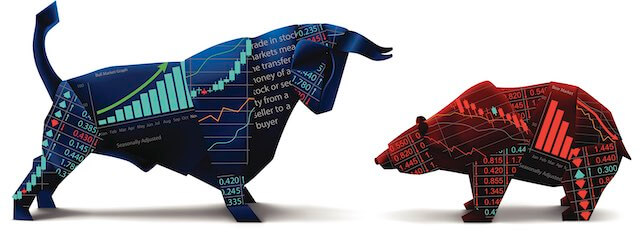
The stock market declined 89% over a three-year period during the Great Depression. At the end of quarter that just ended, the stock market is down 23.4% from its recent high. In the bear market from 2000 - 2002, the market dropped 35.2% below its high. The S&P 500 (the index used by the C fund) is down 25.5% from its high last Fall. It would have to fall another 28.4% just to match the 2002 decline. Perhaps it will fall as far as it did when the internet bubble burst. But also check to see the monthly returns for the TSP funds beginning in 2003 or the yearly returns for the TSP funds when the market came back from the bursting of the Internet bubble.

Second, regardless of what Congress decides to do with bail-out legislation, the possibility of another Great Depression is not likely. Before the stock market crash in 1929, no one was really worried about or was able to foresee the calamity that followed. The Federal Reserve was still very weak in that era. There is no doubt today that the Federal Reserve and the Treasury Department are willing to provide financing to get the economy moving again. Companies also have considerable cash on their books and there are multiple trillions of dollars in money market funds that are not being loaned out.

Each situation is different. There is little doubt we are or will later be told we are in a recession. There is probably less of a reason to be concerned about your investments today than when the stock market index topped 14,000 and there was little talk in public about the credit problems now facing our financial system. Each person makes individual decisions about investing. It is understandable that those who listen to the financial news and political speeches every day are suffering emotional distress and may even think that our current situation is comparable to the market crash in 1929. If an investor responds to each headline or each attention grabbing speech line, you will make foolish decisions with your future retirement money. Diversify your investments, check your allocation for each TSP fund and adjust the amount in each fund periodically to reflect the market changes. In the long run, you are likely to come out better than making a snap decision.

As President Franklin Roosevelt noted in his inaugural address in 1932: ""The only thing we have to fear is fear itself."

Or, alternatively, you can sell all of your stock funds, put all of your money into the G fund, and not worry about the future of the stock market. When the market heads back up, as it has done in the past, you will have locked in your losses and ensured you will not get back the money that has disappeared from your TSP accounts in the past few months.


© 2009 FedSmith Inc. All rights reserved. This article may not be reproduced without express written consent of FedSmith Inc.

Add a Comment about this Article

** All fields are required.
Note: Your comments will not show up right away. FedSmith.com selects the most insightful comments from our readers for posting. If selected, your comments will show up in the comments section after they have been reviewed and approved. See our terms of use for more information.

Readers' Comments

  • Are the data that supports your contention is.....? We won't know how this will compare to the internet bubble. We do know that, as Ralph said, the market roared back over the next few years....
    Posted: October 25, 2008 9:33 AM
  • The 20 year time frame for investing in the TSP might be meaningful for an employee with 10 years or less of service so far. The C fund mirrors the S&P500 Index fund more or less. Over the Last 10 years the S&P Index has been essentially flat, which means that any sum invested 10 years ago is probab...
    Posted: October 16, 2008 2:00 PM
  • I don't see how you can say "leave as much as possible in the stock market and avoid locking in your losses"when the market has loss at least 12 months going back? I moved my money into the G fund a year ago to "lock in my earnings". When I see the market go up two months or so I will move it back ...
    Posted: October 15, 2008 1:55 PM

View All Comments »

MORE BY RALPH SMITH

Contact Ralph Smith or read more articles on the author's page.